08/02/2026
 There are places in the Cyclades where the stone whispers secrets of centuries past, and every step feels like a page from a history book. The Venetian Castle of Naxos (known as Kastro), crowning the top of Chora, is a living medieval settlement that has been continuously inhabited since the day it was built. If you are planning your accommodation in Naxos at Dedalos Studios, this journey through time, art, and culture will reveal the most aristocratic and mysterious side of the island.
The History: From Marco Sanudo to Modern Times
The history of Naxos changed radically in 1207 when the Venetian crusader Marco Sanudo captured the island and founded the Duchy of the Aegean (or Duchy of Naxos). To solidify his rule, he built the Castle on the ruins of the ancient acropolis, reusing marble and stones from ancient monuments. For centuries, the Castle served as the administrative, religious, and residential center for the Venetian Catholic nobility. Following the Ottoman conquest in 1566 and the island’s subsequent liberation, the Castle was never abandoned. Today, descendants of the old noble families still reside in some of the mansions, keeping its authentic, aristocratic aura very much alive.Architecture and Mansions with Coats of Arms
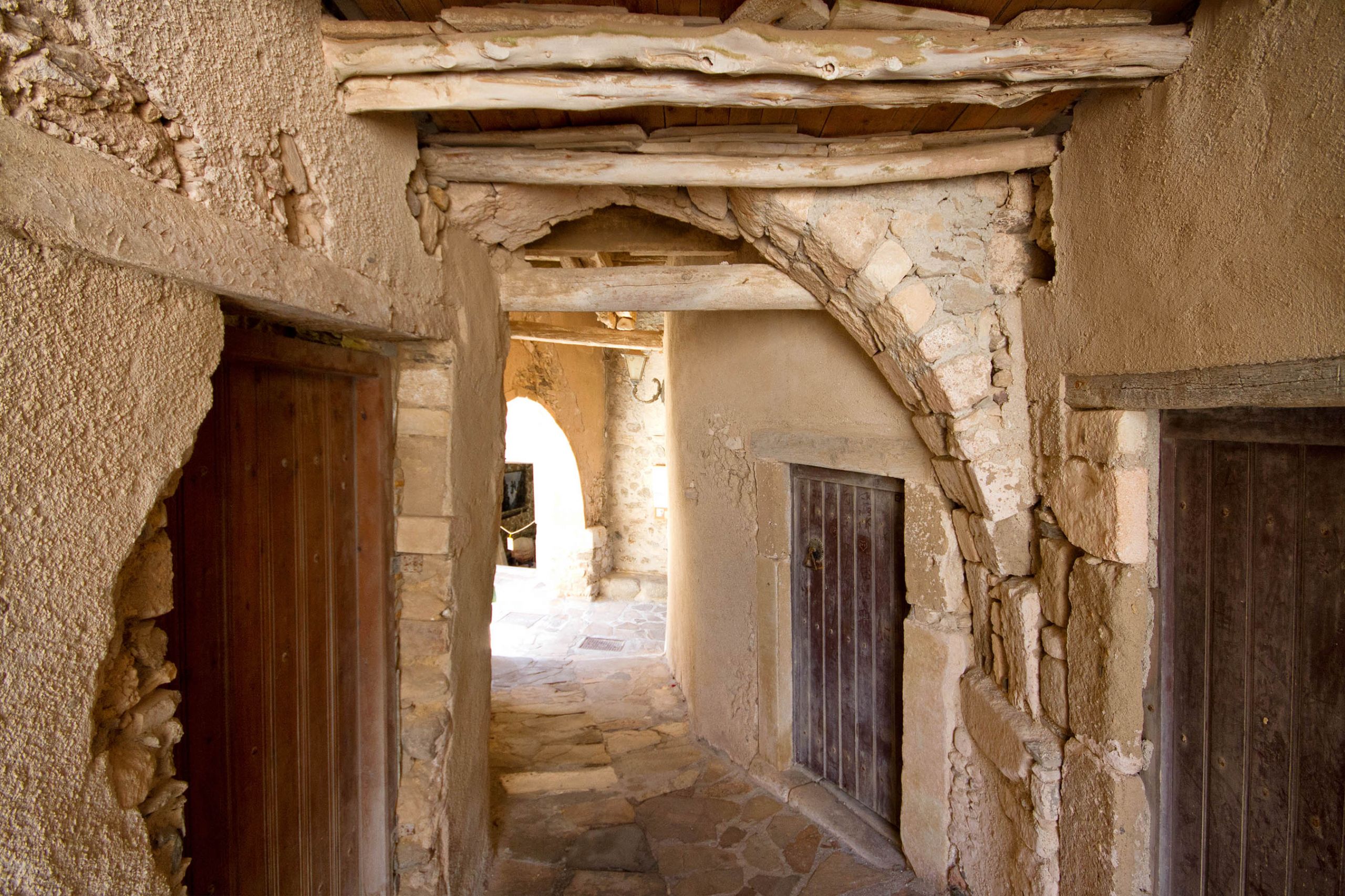
The architecture of the Castle is unique: the outer walls of the noblemen’s houses double as the defensive fortification wall, with their windows facing inward for protection against pirate raids. Entry to the settlement is granted through two surviving medieval gates. The most famous is Trani Porta (the Northern Gate), which still retains its original wooden lining and the sword gashes left by guards long ago. As you pass through the gate, time turns back. Strolling through the shaded alleyways, take a close look at the facades of the stone medieval towers and mansions. Above the heavy wooden doors, you will spot the carved marble coats of arms of famous Venetian families (such as Sanudo, Crispi, Barozzi, Sommaripa, and Sanazzaro), showcasing the glorious past of their residents.Monuments of Religious and Historical Interest
The central square of the Castle gathers some of the most important attractions in Naxos:- The Catholic Cathedral of Naxos: A striking 13th-century church with a marble floor, lined with the funerary slabs of Venetian nobles depicting their coats of arms. It houses a rare, double-sided Byzantine icon of the Virgin Mary (featuring the Virgin Eleousa on one side and Saint John the Evangelist on the other).
- The Former Ursuline Monastery: An imposing building that functioned as a French school for girls and stood as the most significant intellectual center of the Cyclades for centuries. Today, it hosts cultural exhibitions.
- The Capuchin Monastery: A historic 17th-century monastery, including the Church of Saint Anthony of Padua, which holds a rich religious heritage.
Culture, Museums, and Festivals
The Castle is not just a monument; it is a vibrant beacon of culture hosting major museums in Naxos:- The Archaeological Museum of Naxos: Housed in the old Commercial School (where the famous writer Nikos Kazantzakis studied), it features a world-class collection of Early Cycladic marble figurines.
- Glezos (Crispi) Tower: The only one of the Castle’s twelve defensive towers that still stands intact today. It operates as the Byzantine Museum.
- Domus Della Rocca-Barozzi Venetian Museum: An authentic mansion converted into a living museum, offering an intimate glimpse into the daily life of Venetian nobles.
Cultural Activities & Festivals
Every summer, the Castle transforms into an open-air cultural stage. The Naxos Festival (centered at Bazeos Tower outside the Castle but spreading its wings everywhere) and the cultural events of the Domus Cultural Festival held within the Venetian Museum fill the nights with classical and jazz concerts, theatrical plays, and candlelit art exhibitions, offering an unforgettable atmosphere.Flavor, Relaxation, and Curated Shopping
Unlike the bustling Old Market located lower down the hill, life within the walls of the Castle moves at a calmer, low-profile pace. Here, commercial activity is highly discreet to preserve the settlement’s character. You will find a few, carefully curated little shops selling collectibles, books, and artwork. When it comes to dining and unwinding, the Castle hides a couple of atmospheric wine bars and coffee shops on roof terraces (such as the historic Avaton), where you can enjoy a glass of Naxian wine with a sunset view, far away from the crowds. Set your senses free, respect the quiet of the permanent residents, and let the Venetian Castle tell you its very own medieval fairytale.-
Apeiranthos Naxos: The Marble Village of History, Culture, and Fine Crafts
-
Halki Naxos: The Aristocratic Heart of Tragea and the Ultimate Village of Arts
-
The Archaeological Treasures of Naxos: A Journey into the Island’s Glorious Past
-
Plaka Beach Naxos: An Endless Paradise of Golden Sand
-
Saint George Beach Naxos: The Gem of Naxos Town