26/05/2026
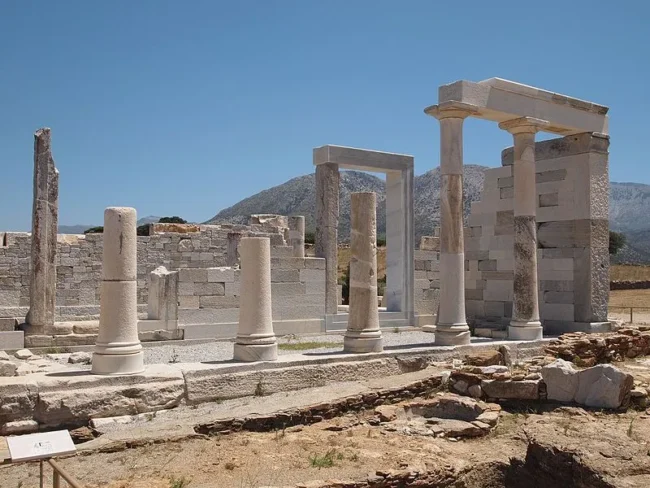
Demeter Temple Naxos
-
The Temple of Demeter in Sangri: The Prelude to the Parthenon
- Construction & Architecture: Built around 530 BC entirely from white Naxian marble, it is one of the earliest examples of the Ionic order. It is considered a “precursor” to the architecture of the Parthenon, as many of its structural elements were later adopted in Athens.
- Usage & Peak: The temple was dedicated to Demeter, the ancient goddess of agriculture and fertility. The ancient Naxians worshipped her here to ensure the prosperity and abundance of the fertile Sangri valley.
- Decline & Later Use: With the rise of Christianity in the 6th century AD, the temple suffered damages and was converted into a Christian basilica. Today, the site has been exemplary restored, and a superb, award-winning museum operates right next to it.
-
The Sanctuary of Yria: The Sacred Place of Dionysus
- Construction & Architecture: The location was used as a place of worship as early as 1400 BC (Mycenaean era). The grand marble temple seen today was constructed in the 6th century BC and stands as a rare specimen of early Ionic architecture.
- Usage & Peak: This was the official sanctuary of the patron god of Naxos, Dionysus. Grand rituals and libations with famous Naxian wine took place here to honor the god of joy, festivity, and winemaking.
- Decline: Due to frequent flooding from the nearby river, the temple faced structural challenges even during antiquity. It was rebuilt during the Roman period, but with the advent of Christianity, the sanctuary was abandoned and eventually buried under silt until it was unearthed by archaeological excavations.
-
The Giant Kouroi of Naxos: The Unfinished Masterpieces
- The Kouros of Melanes (Flerio): Nestled in a lush, green private garden, you will find a Kouros measuring about 6 meters in length, dating back to the 6th century BC. Just a short walk further up, at the Faraggi site, lies a second Kouros.
- The Kouros of Apollonas: Located in the northern part of the island in an ancient quarry near the village of Apollonas, this is the largest Kouros in Naxos, stretching to an impressive 10.5 meters. It is believed to represent either the god Dionysus or Apollo.
- History & Abandonment: These statues were carved directly into the living marble bedrock of the quarries. Due to accidents during transport (e.g., a crack appearing in the stone) or political upheavals (such as the overthrow of the tyrant Lygdamis), the works stopped abruptly, leaving these colossal masterpieces unfinished for us to admire in their natural setting today.
-
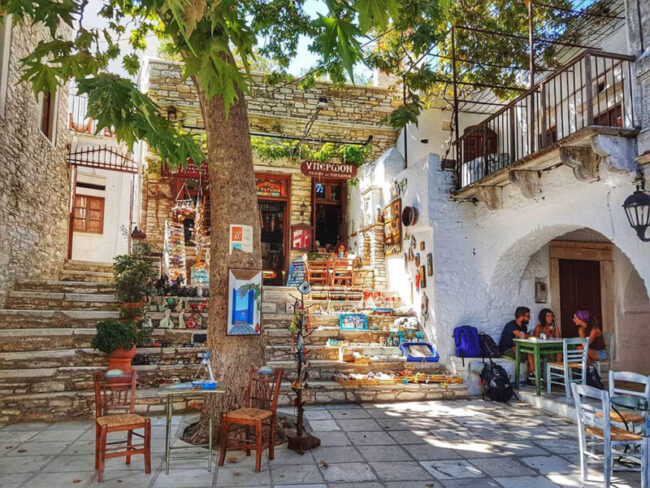
Apeiranthos Naxos: The Marble Village of History, Culture, and Fine Crafts
-
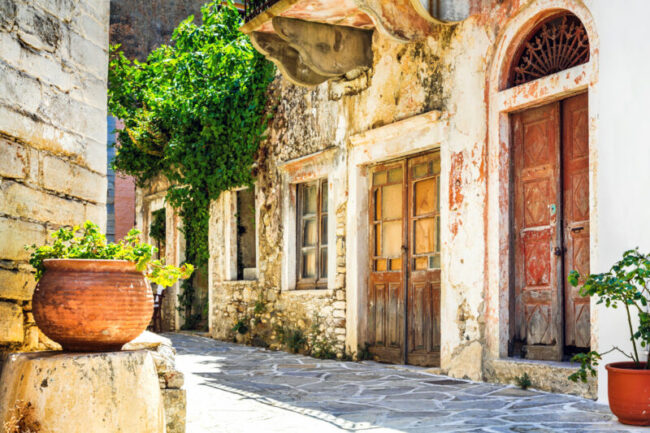
Halki Naxos: The Aristocratic Heart of Tragea and the Ultimate Village of Arts
-
The Archaeological Treasures of Naxos: A Journey into the Island’s Glorious Past
-
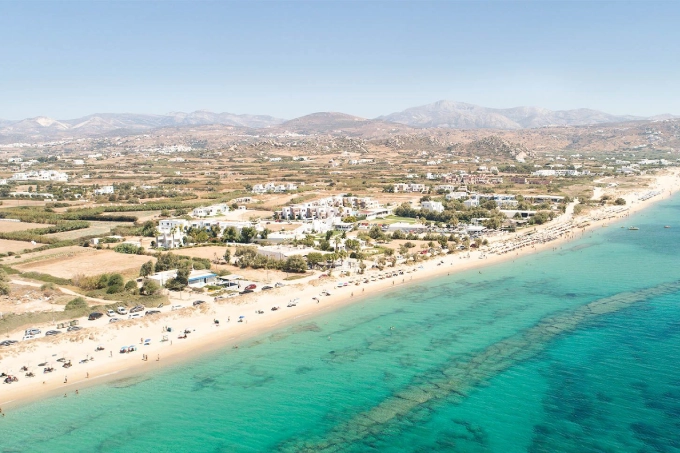
Plaka Beach Naxos: An Endless Paradise of Golden Sand
-
Saint George Beach Naxos: The Gem of Naxos Town